
The Complete Guide to BBQ Etiquette: Why It Matters and How to Get It Right
The Complete Guide to BBQ Etiquette: Why It Matters and How to Get It Right
Barbecuing is one of the oldest and most universal forms of communal cooking. Across cultures and continents, gathering around a fire to share food is a tradition that predates civilization itself. Yet for all its informal charm, the modern backyard barbecue carries with it a set of social expectations that, when ignored, can turn a perfectly good afternoon into an uncomfortable one. This guide is intended to lay out those expectations clearly — for hosts and guests alike — so that everyone walks away full, happy, and invited back.
Why Etiquette at a BBQ Actually Matters
It’s easy to dismiss etiquette as stuffy formality out of place at a casual cookout. But etiquette, at its root, is simply about consideration for others. At a barbecue, where food is being prepared openly, resources are shared, and people of different backgrounds and dietary needs are brought together, thoughtful behavior isn’t optional — it’s what makes the whole thing work.
A poorly handled BBQ creates real problems: hosts who feel taken advantage of, guests who feel excluded, food that runs short because of inconsiderate serving habits, and social tensions that linger long after the coals go cold. Getting the etiquette right prevents all of that and elevates the experience for everyone present.
For Guests: Before You Arrive
Confirm your attendance and stick to it. A host plans food quantities based on headcount. Canceling last minute — or worse, not showing up without notice — wastes food, money, and effort. If your plans change, communicate as early as possible.
Ask what to bring. Showing up empty-handed to a barbecue is poor form unless you have been explicitly told otherwise. Reach out ahead of time and ask what the host needs. Common contributions include drinks, ice, a side dish, a dessert, or paper goods. Don’t assume the host has everything covered.
Disclose dietary restrictions in advance. If you are vegetarian, vegan, have a food allergy, or observe any dietary laws, inform your host when you RSVP — not when you arrive. This gives the host time to plan accordingly and ensures you have something to eat. Springing dietary restrictions on a host at the grill is unfair and puts everyone in an awkward position.
Be on time, but not too early. Arriving significantly late means the food may already be gone or the host’s timing is thrown off. Arriving too early means walking into a host who is still preparing and isn’t ready for guests. Aim to arrive within fifteen to twenty minutes of the stated start time.
For Hosts: Setting the Stage
Communicate clearly. Let guests know the start time, approximate end time, what the menu looks like, and what — if anything — they should bring. Ambiguity creates anxiety and leads to either an oversupply of the same item or critical gaps in the spread.
Plan for dietary diversity. Even if your crowd is mostly meat-eaters, having at least one or two substantial options for guests who don’t eat meat is a mark of a considerate host. Grilled vegetables, a solid salad, or a plant-based protein option costs little extra effort and ensures no one goes hungry.
Brief your helpers. If someone offers to assist and you accept, give them clear direction. An uninformed helper can disrupt the flow of the grill, mislabel dishes, or inadvertently cross-contaminate food. A well-briefed helper makes the whole event run more smoothly.
Have a plan for the grill. Know your cooking order before the first item goes on. Meats with longer cook times go first. Items that need to rest before serving should be timed accordingly. Having a clear plan prevents the chaotic situation of everything coming off the grill at once — or nothing being ready when guests are hungry.
At the Grill: The Central Rules
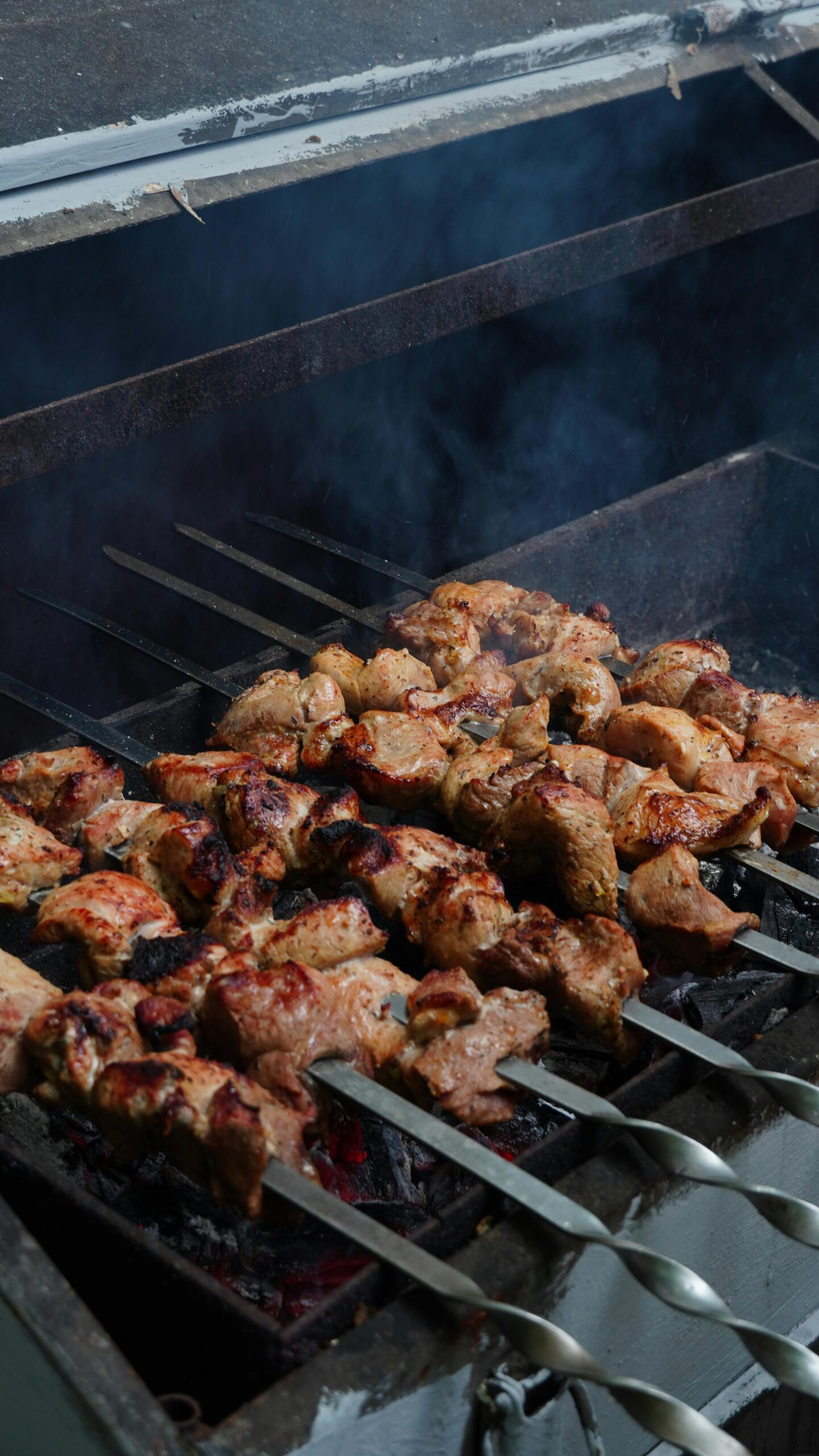
The pit master has final authority. Whoever is managing the grill is in charge of that space. This is not a democratic process. Offering unsolicited cooking advice, reaching over to adjust the heat, or attempting to take over the tongs without invitation are all serious violations of BBQ decorum. If you have experience and want to contribute, offer — don’t impose.
Do not crowd the grill. Standing directly over the grill while food is cooking creates hazards and makes the cook’s job harder. Give them room to work. The results will be better for it.
Never add items to someone else’s grill without asking. If you brought your own food to cook — whether for dietary reasons or personal preference — always ask the host before placing anything on the grill. Grills have limited space and the host is managing a specific sequence. An unauthorized addition can throw off timing and temperature.
At the Table: Serving and Eating
Wait for a signal before serving yourself. Unless the host explicitly opens the spread, do not begin loading your plate the moment food appears. Wait until it is clear that serving has begun, that the host has indicated the food is ready, or that a reasonable amount is available for the group.
Serve others before going back for seconds. At the first pass, ensure that everyone has had the opportunity to get food before returning for more. This is especially important with items that are in limited supply. The goal is a table where everyone eats well, not a table where the fastest movers eat the most.
Mind portion sizes. Take reasonable portions, particularly of items that appear to be in limited quantity. You can always go back. You cannot put food back once it’s on your plate.
Respect what others brought. If a guest contributed a dish — particularly one that reflects their culture or family tradition — engage with it respectfully. Try it, acknowledge it, and avoid making dismissive comments about unfamiliar foods. The communal table is a place of generosity, and that generosity deserves to be honored.
Children and Pets
You are responsible for your children. A backyard barbecue has real hazards — open flames, hot surfaces, sharp utensils, and food at ground level. Keep your children in your line of sight at all times. Do not assume that other adults will manage your children’s behavior or safety for you.
Ask before bringing a pet. Not all hosts want animals at their gathering, and not all guests are comfortable around them. Always ask in advance. If permission is granted, keep the animal leashed, away from the food table, and under control at all times. Clean up after your pet immediately and without being asked.
Cleanup and Departure
Help with cleanup. When the meal winds down, offer to assist. Clearing plates, collecting trash, breaking down tables, and helping to cover or store leftover food are all appropriate contributions. You don’t need to scrub the host’s kitchen, but leaving them to clean up entirely on their own is inconsiderate.
Don’t overstay. Read the room. When the host begins tidying up, when the food is long gone, or when the energy of the gathering begins to wind down, take the cue. Thank the host sincerely and leave at a reasonable time. The effort that went into the event deserves acknowledgment, not an indefinite extension.
Follow up. A brief message the following day thanking the host for their effort is a small gesture that goes a long way. It costs nothing and means more than most people realize.
A Final Word
The best barbecues feel effortless, but they rarely are. Behind every great cookout is a host who planned carefully, spent money generously, and gave their time to create an experience for others. Good BBQ etiquette is simply the practice of recognizing that effort and responding to it with equal thoughtfulness. Master these basics and you will always be welcome at the grill.